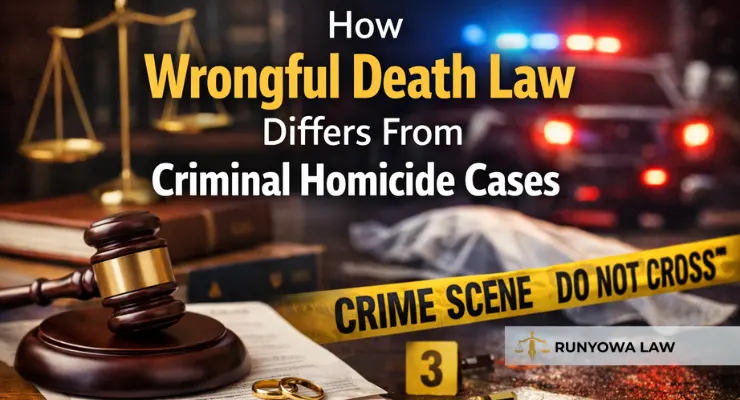
When a loved one dies unexpectedly due to another party’s actions, families are often thrust into a confusing legal landscape. Many people assume that wrongful death law and criminal homicide cases are the same—or at least closely connected. In reality, they are two very different legal paths, each with its own purpose, procedures, and outcomes.
Understanding how wrongful death law differs from criminal homicide cases helps families make informed decisions during an emotionally overwhelming time. This guide explains those differences clearly, while also showing how civil remedies can coexist with criminal proceedings.
Understanding Wrongful Death Law
What Is Wrongful Death Law?
Wrongful death law is a branch of civil law that allows surviving family members to seek compensation when a person dies due to another party’s negligence, recklessness, or intentional act. It focuses on accountability and financial recovery for those left behind rather than punishment.
Wrongful death law recognizes that the loss of a family member creates long-term emotional and economic consequences, and it provides a structured legal process to address those harms.
Common Situations Covered Under Wrongful Death Law
Wrongful death law may apply in many scenarios, including:
- Motor vehicle accidents
- Workplace incidents
- Medical malpractice
- Defective or dangerous products
- Nursing home abuse or neglect
- Unsafe property conditions
In all of these situations, wrongful death law focuses on whether the death could have been prevented through reasonable care.
What Is Criminal Homicide?
Definition of Criminal Homicide
Criminal homicide falls under criminal law and occurs when the state prosecutes an individual for unlawfully causing another person’s death. These cases may involve charges such as murder, manslaughter, or criminal negligence causing death.
Unlike wrongful death law, criminal homicide cases are initiated and controlled entirely by the government.
Purpose of Criminal Homicide Cases
The purpose of criminal homicide cases is to:
- Punish unlawful conduct
- Deter future crimes
- Protect public safety
- Uphold societal rules and laws
Compensation for surviving family members is not the primary focus of criminal proceedings.
Wrongful Death Law vs Criminal Homicide: Key Differences
Civil Law vs Criminal Law
One of the most important distinctions is the type of law involved:
- Wrongful death law is a civil action
- Criminal homicide cases are criminal prosecutions
This difference affects who files the case, how evidence is evaluated, and what outcomes are possible.
Who Files the Case?
Under wrongful death law, the claim is filed by:
- A surviving spouse
- Children or dependents
- Parents of the deceased
- A legal representative of the estate
In contrast, criminal homicide cases are filed by prosecutors on behalf of the state, not by the family.
Burden of Proof
Another critical difference between wrongful death law and criminal homicide is the burden of proof.
- Wrongful death law requires proof on a balance of probabilities
- Criminal homicide cases require proof beyond a reasonable doubt
This lower burden of proof makes wrongful death law an important option for families, even when criminal charges are not successful.
Legal Goals Compared
Goals of Wrongful Death Law
The primary goals of wrongful death law include:
- Financial compensation
- Accountability for negligent behavior
- Recognition of family loss
- Long-term financial stability
Families seeking guidance after a fatal loss often explore civil remedies alongside resources such as our detailed guide on Why You Should Hire a Death Lawyer After a Tragic Loss, which explains how legal support can help during difficult times.
Goals of Criminal Homicide Cases
Criminal homicide cases aim to:
- Secure convictions
- Impose imprisonment or penalties
- Serve the public interest
Even when a conviction occurs, criminal court does not address the financial needs of surviving families.
Damages Available Under Wrongful Death Law
Economic Damages
Wrongful death law allows families to recover measurable financial losses, such as:
- Lost income and future earnings
- Medical expenses related to the final injury
- Funeral and burial costs
- Loss of employment benefits
Non-Economic Damages
In addition to financial losses, wrongful death law recognizes intangible harms, including:
- Loss of companionship
- Loss of guidance and support
- Emotional pain and suffering
These damages reflect the human impact of losing a loved one.
Punitive Damages in Wrongful Death Law
In certain cases involving extreme misconduct, wrongful death law may allow punitive damages. These are designed to punish particularly reckless or intentional behavior and deter similar conduct in the future.
Can Wrongful Death and Criminal Cases Proceed Together?
Parallel Legal Proceedings
Yes. Wrongful death law claims and criminal homicide cases can proceed at the same time or independently. A criminal acquittal does not prevent a family from succeeding under wrongful death law.
Understanding how civil cases move forward after court decisions can also be helpful. For a broader explanation of post-judgment legal options, readers may explore Court Appeal Explained: When, Why, and How It Works.
Why Families Rely on Wrongful Death Law
Families often pursue wrongful death law claims because they:
- Maintain control over the case
- Can recover meaningful compensation
- Typically resolve faster than criminal trials
- Provide acknowledgment of personal loss
Statute of Limitations Differences
Time Limits Under Wrongful Death Law
Wrongful death law imposes strict deadlines for filing claims. Missing these deadlines can permanently bar a family’s right to compensation.
Criminal Case Timeframes
Criminal cases follow different limitation rules and are controlled entirely by prosecutors, not families.
Evidence in Wrongful Death Law Cases
Types of Evidence Commonly Used
Evidence in wrongful death law cases may include:
- Medical records
- Accident and police reports
- Expert testimony
- Witness statements
Because the standard of proof is lower, circumstantial evidence often plays a key role.
Legal Representation: Civil vs Criminal
Representation in Wrongful Death Law
Lawyers handling wrongful death law claims focus on investigation, valuation of damages, negotiation, and trial advocacy. Families may also consult experienced professionals, including lawyers in regina saskatchewan, depending on jurisdiction and local practice needs.
Representation in Criminal Cases
Criminal defense attorneys represent the accused, not the victim’s family—another important distinction from wrongful death law proceedings.
Emotional Impact on Families
Why Wrongful Death Law Feels More Personal
Because families actively participate, wrongful death law often provides a stronger sense of validation and involvement than criminal cases.
Finding Closure Through Civil Justice
While no legal process can undo a tragic loss, wrongful death law may help families find closure, stability, and acknowledgment of their suffering.
FAQs
1. Is wrongful death law the same as a criminal homicide case?
No. Wrongful death law is a civil process, while homicide cases are criminal prosecutions.
2. Can I file a wrongful death claim if no criminal charges are filed?
Yes. Wrongful death law does not depend on criminal charges or convictions.
3. Who can file a wrongful death law claim?
Eligible family members or estate representatives may file under wrongful death law.
4. What is the main benefit of wrongful death law?
The ability to recover financial compensation and hold responsible parties accountable.
5. How long do wrongful death law cases usually take?
Timelines vary, but many resolve faster than criminal proceedings.
Conclusion
Understanding how wrongful death law differs from criminal homicide cases allows families to choose the legal path that best protects their interests. While criminal law focuses on punishment, wrongful death law centers on compensation, accountability, and healing—providing families with a meaningful way to pursue justice after a devastating loss.