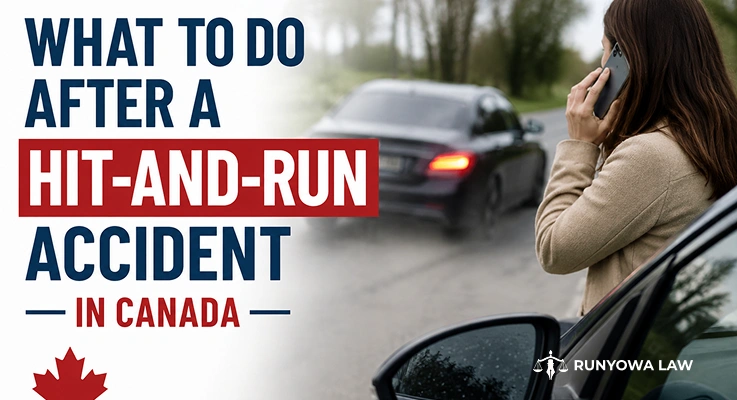
A hit and run accident in Canada situation can happen without warning and leave victims feeling confused, angry, and uncertain about what to do next. As one of the more challenging types of automobile accidents, hit-and-run collisions often create additional stress because the responsible driver leaves the scene before exchanging information. One moment you are driving home, parked outside work, or stopped at an intersection—and the next, another vehicle strikes yours and disappears.
Hit-and-run incidents are serious because victims frequently face vehicle damage, injuries, insurance complications, and emotional distress. Among different automobile accidents, these cases can be more difficult due to missing driver information and delayed investigations. In some situations, delayed reporting or failure to follow Canada accident reporting rules may affect insurance claims or police investigations.
Knowing exactly what to do after a hit and run accident Canada can improve your chances of recovering compensation, supporting investigations, and protecting your legal rights after automobile accidents involving unidentified drivers.
This guide explains the immediate actions to take, reporting requirements, insurance considerations, compensation options, and common mistakes to avoid following a hit-and-run collision in Canada.
Quick Answer: What Should You Do After a Hit and Run Accident in Canada?
If you are involved in a hit and run accident Canada, take these steps immediately:
- Move to a safe location
- Check for injuries and call emergency services if needed
- Record details about the fleeing vehicle
- Take photos and collect evidence
- Speak with witnesses
- Report the incident to police
- Follow Canada accident reporting rules
- Contact your insurance provider promptly
- Seek medical evaluation
- Understand your legal options if injuries occur
Acting quickly can significantly strengthen investigations and insurance claims.
Understanding What Counts as a Hit and Run Accident Canada
A hit-and-run occurs when a driver leaves the scene after causing a collision without providing legally required information or assistance.
Examples include:
- A driver hits your parked vehicle and drives away
- A collision occurs at an intersection and the other driver flees
- A pedestrian or cyclist is struck and the driver leaves
- Another vehicle causes an accident and refuses to stop
Leaving an accident scene can carry serious legal consequences in Canada.
Step 1: Prioritize Safety Immediately After the Collision
The first priority after a hit and run accident in Canada is safety.
If possible:
- Turn on hazard lights
- Move the vehicle away from active traffic
- Avoid standing in unsafe areas
- Call emergency responders when injuries occur
Do not attempt to chase the fleeing driver.
Many victims react emotionally and pursue the vehicle, which may create additional risks or collisions.
If someone experiences:
- Neck pain
- Bleeding
- Difficulty breathing
- Head injury symptoms
- Loss of consciousness
Seek emergency medical attention immediately.
Step 2: Try to Remember Details About the Vehicle That Left
Small details may help police identify the responsible driver.
Record information such as:
Vehicle Information
- Colour
- Make
- Model
- Type (SUV, sedan, truck)
- Damage visible on vehicle
Driver Details
- Approximate age
- Gender
- Clothing
- Distinct features
Scene Details
- Time of accident
- Direction vehicle travelled
- Nearby landmarks
- Weather conditions
Even partial license plate information can help.
Example:
Instead of:
“Dark vehicle”
Try noting:
“Black SUV, possible Honda CR-V, front bumper damage, heading west.”
Specificity improves investigations.
Step 3: Collect Evidence Immediately
Evidence is critical after a hit and run accident Canada because another driver may deny involvement if located later.
Take photographs of:
- Vehicle damage
- Skid marks
- Debris
- Road conditions
- Traffic signs
- Nearby cameras
- Weather conditions
- Injury evidence when appropriate
Also gather:
- Dashcam recordings
- Witness statements
- Phone numbers
- CCTV sources
- Business security cameras nearby
Evidence collected within minutes can become valuable weeks later.
Step 4: Follow Canada Accident Reporting Rules Carefully
Understanding Canada accident reporting rules is one of the most important steps after a collision.
Reporting requirements differ by province, but reporting may be necessary when:
- Someone is injured
- Damage exceeds provincial thresholds
- Criminal activity is involved
- Drivers leave the scene
- Public property is damaged
Certain provinces require reporting through collision reporting centres.
Failure to comply with Canada accident reporting rules may affect:
- Insurance eligibility
- Claims processing
- Police investigations
- Compensation outcomes
When uncertain, report the accident promptly.
Step 5: Contact Police After a Hit and Run Accident Canada
Reporting a hit and run accident in Canada to police creates an official record.
Police reports may support:
- Insurance claims
- Injury compensation requests
- Future legal proceedings
- Vehicle recovery investigations
Provide:
- Photos
- Witness information
- Vehicle descriptions
- Medical documentation
- Dashcam footage
Request the report number for insurance purposes.
Why Police Reports Matter
A police report establishes:
- Date of incident
- Location
- Evidence collected
- Statements provided
- Initial findings
Insurance companies often request this documentation.
Step 6: Notify Your Insurance Company Quickly
Many insurers require reporting within a reasonable timeframe.
When contacting your provider, have ready:
- Police report number
- Photos
- Repair estimates
- Witness information
- Medical records
- Collision timeline
Delays can sometimes complicate claims.
Can Insurance Cover a Hit and Run Accident in Canada?
One of the most common questions is:
“Will insurance help if the driver is never found?”
In many situations, coverage may apply depending on policy terms.
Possible protections include:
Collision Coverage
May assist with repair costs.
Uninsured Motorist Protection
Can help when responsible drivers cannot be identified.
Accident Benefits
May provide support for:
- Medical treatment
- Rehabilitation
- Income replacement
- Care expenses
Coverage varies significantly among policies.
Step 7: Seek Medical Attention Even if You Feel Fine
Many accident injuries appear hours or days later.
After a hit and run accident Canada, watch for symptoms such as:
- Headaches
- Neck stiffness
- Back pain
- Dizziness
- Sleep disturbances
- Numbness
- Anxiety
Prompt medical evaluation creates records connecting injuries to the incident.
Delayed treatment may weaken compensation claims.
Common Injuries Seen After Vehicle Collisions
Some frequently reported injuries include:
- Whiplash
- Soft tissue injuries
- Concussions
- Fractures
- Shoulder injuries
- Psychological trauma
Even low-speed impacts can cause lasting effects.
Step 8: Know Your Rights After a Hit and Run Accident Canada
Victims often underestimate available protections.
Depending on circumstances, compensation may involve:
- Insurance benefits
- Vehicle repair reimbursement
- Medical expenses
- Rehabilitation support
- Income replacement
- Pain and suffering claims
- Long-term disability support
Understanding options early is important.
Emotional Impact Is Often Overlooked
Physical injuries are not the only consequence.
Victims may experience:
- Anxiety
- Fear of driving
- Stress
- Sleep problems
- Depression
- Trauma symptoms
Mental health support may become part of recovery.
Common Mistakes People Make After a Hit and Run Accident Canada
Avoid these errors:
1. Chasing the Driver
This increases danger.
2. Not Calling Police
Missing documentation may weaken claims.
3. Delaying Medical Care
Symptoms often appear later.
4. Forgetting Witness Details
Witnesses may become difficult to contact.
5. Ignoring Canada Accident Reporting Rules
Delayed reporting can create complications.
6. Assuming Insurance Will Reject Claims
Coverage may still apply.
What If Your Parked Car Was Hit?
Parked vehicle hit-and-runs are common.
Steps include:
- Photograph damage immediately
- Check nearby businesses for cameras
- Look for witnesses
- Report incident to police
- Contact insurer promptly
Do not delay action because evidence may disappear quickly.
Frequently Asked Questions (FAQs)
- What is considered a hit and run accident in Canada?
A hit-and-run occurs when a driver leaves an accident scene without providing required information or assistance.
- Should I report a hit-and-run if damage appears minor?
Yes. Following Canada accident reporting rules protects evidence and may support future insurance claims.
- Can police identify hit-and-run drivers?
Sometimes. Cameras, witnesses, debris, and license plate information can assist investigations.
- Will insurance cover a hit and run accident in Canada?
Coverage depends on policy details and available protections.
- How long do I have to report a hit-and-run in Canada?
Timeframes vary. Reporting immediately is generally recommended.
Conclusion
A hit and run accident Canada incident can happen unexpectedly, leaving victims dealing with vehicle damage, injuries, financial stress, and uncertainty about the next steps. While the situation may feel overwhelming, responding quickly and following the correct process can protect both your wellbeing and your legal rights. After any collision, prioritize safety, collect evidence, report the incident to police, and follow Canada accident reporting rules to support investigations and insurance claims.
Prompt medical attention and early communication with your insurance provider may improve claim outcomes and help document injuries that appear later. Every case is different, and compensation or coverage options often depend on the circumstances of the accident and available insurance protections. Understanding your rights after a hit and run accident Canada can make a significant difference in recovery—physically, emotionally, and financially.The most important thing to remember is this: do not ignore a hit-and-run, even if the damage seems minor. Taking immediate action may strengthen your ability to recover losses, access support, and move forward with greater confidence. Written by Tavengwa Runyowa, sharing informational insights on legal rights, insurance considerations, and recovery steps following automobile accidents and hit-and-run incidents in Canada.