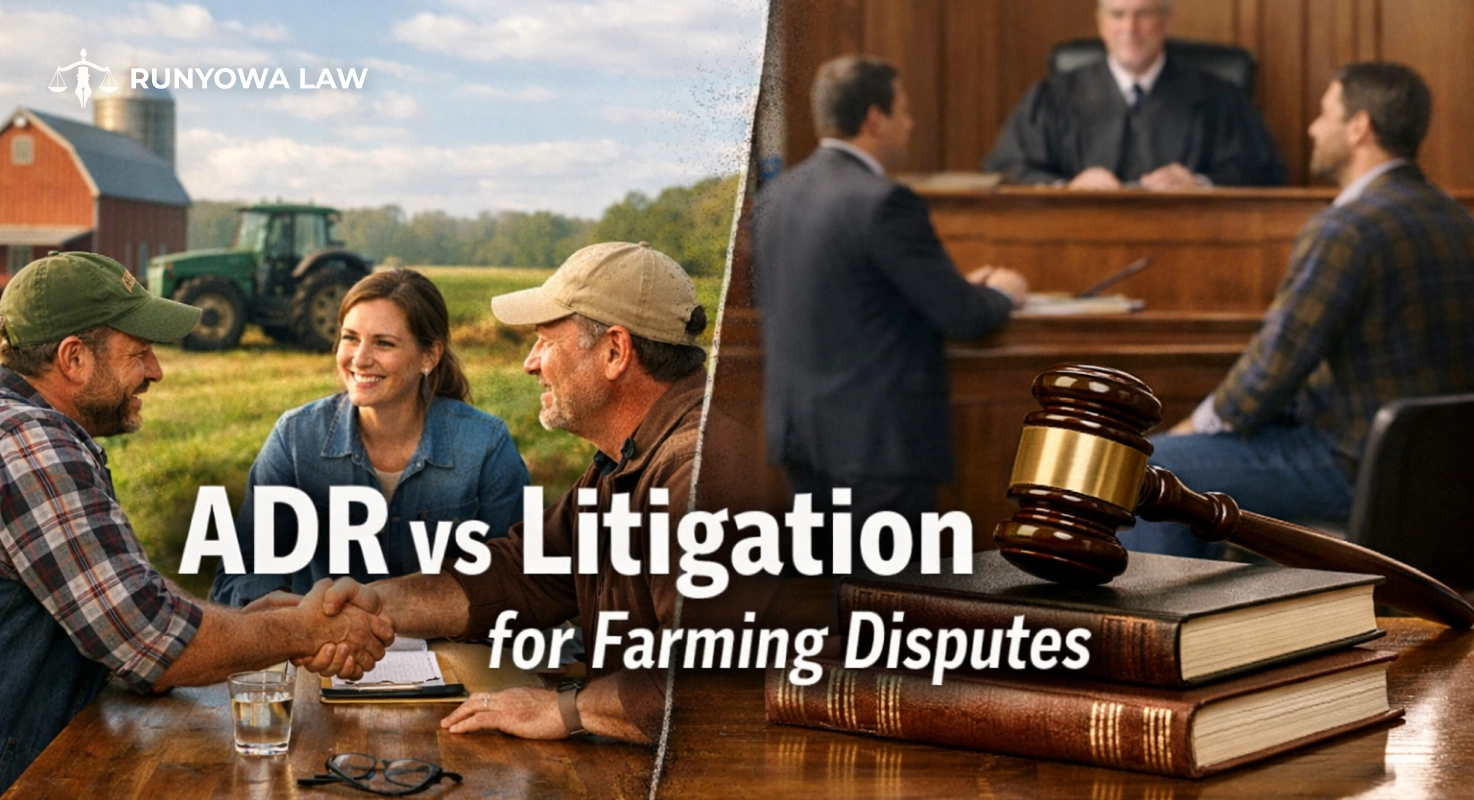
Farming disputes can quickly turn into stressful, expensive, and long-term legal battles if not handled properly. In Canada, selecting the right method for farm dispute resolution is essential to protect your land, finances, and relationships. With rising legal costs and court delays, many farmers are actively searching for the best way to resolve agricultural disputes without damaging their operations.
Whether the issue involves land, contracts, or family succession, understanding the difference between ADR and litigation can help you make the right decision at the right time.
Understanding Farm Disputes in Canada
Farm disputes are often more complex than typical business conflicts because they involve both financial and emotional factors. Agriculture in Canada contributes over $140 billion annually to GDP, making disputes not just personal—but economically significant.
Common Types of Farming Disputes
- Land boundary and ownership conflicts
- Lease and tenancy disagreements
- Farm partnership disputes
- Succession and inheritance conflicts
- Breach of agricultural contracts
These disputes can escalate quickly if not managed early, which is why choosing the right farm dispute resolution method is critical in Canada.
What is ADR in Farm Dispute Resolution Canada?
Alternative Dispute Resolution (ADR) refers to resolving disputes outside the courtroom. It is widely recognized as the best way to resolve agricultural disputes in Canada in many cases because it is faster, more flexible, and cost-effective—making it a preferred approach when you hire a lawyer for agriculture dispute resolution.
ADR focuses on collaboration rather than conflict, making it especially useful in rural communities.
Types of ADR Methods
- Mediation: A neutral third party helps both sides reach a mutual agreement
- Arbitration: A third party makes a binding decision after hearing both sides
- Negotiation: Direct discussion between parties to resolve issues
Why ADR is Popular in Canada
- Lower legal costs compared to court cases
- Faster resolution (weeks or months)
- Private and confidential process
- Helps preserve long-term relationships
ADR allows farmers to resolve disputes without disrupting their operations, making it a practical approach for farm dispute resolution in Canada.
What is Litigation in Agricultural Disputes?
Litigation is the formal process of resolving disputes through the court system. It is typically used when parties cannot reach an agreement through ADR or when legal enforcement is required.
Key Features of Litigation
- Involves filing a lawsuit
- Requires legal representation
- Includes court hearings and procedures
- Results in a judge’s legally binding decision
Challenges of Litigation
- High costs (can exceed $100,000)
- Long timelines (1–3 years or more)
- Public exposure of disputes
- Can damage relationships permanently
While litigation has its place, it is usually not the first choice for farm dispute resolution in Canada unless necessary.
ADR vs Litigation: Detailed Comparison
1. Cost Comparison
One of the biggest differences between ADR and litigation is cost.
ADR Costs
- Mediation: $3,000 – $10,000
- Arbitration: $10,000 – $25,000
Litigation Costs
- Legal fees: $25,000 – $150,000+
- Additional court and expert costs
ADR is often the best way to resolve agricultural disputes in Canada when budget is a concern.
2. Time Efficiency
Time is critical in farming due to seasonal work and financial cycles.
ADR Timeline
- Typically resolved within weeks or months
Litigation Timeline
- Can take 12–36 months or longer
Faster resolution through ADR ensures minimal disruption to farming operations.
3. Relationship Impact
Farming communities depend heavily on trust and long-term relationships.
ADR Approach
- Collaborative and solution-focused
- Encourages communication
Litigation Approach
- Adversarial (win vs lose)
- Can create long-term conflict
ADR is the best way to resolve agricultural disputes in Canada when relationships matter.
4. Privacy and Confidentiality
ADR
- Fully private and confidential
Litigation
- Public court records
Confidentiality makes ADR ideal for sensitive disputes like family or financial matters.
When ADR is the Best Choice
ADR works best when both parties are willing to cooperate and find a middle ground. It is especially effective in disputes where maintaining relationships is important.
Ideal Situations for ADR
- Family farm succession disputes
- Partnership disagreements
- Lease or contract conflicts
- Neighboring land disputes
ADR provides flexibility and allows creative solutions that courts may not offer, making it a preferred farm dispute resolution Canada strategy.
When Litigation is Necessary
Despite its drawbacks, litigation becomes essential in certain situations where ADR is not effective.
When to Choose Litigation
- One party refuses to cooperate
- Serious legal violations or fraud
- High-value land or financial disputes
- Need for a legally enforceable judgment
In such cases, litigation ensures legal clarity and protection.
Hybrid Approach: The Smart Strategy
In many real-world scenarios, the most effective approach is not choosing one over the other—but combining both.
Hybrid Strategy Steps
- Start with negotiation or mediation
- Move to arbitration if needed
- Use litigation as a last resort
This layered approach is often the best way to resolve agricultural disputes in Canada in complex cases.
Common Mistakes Farmers Should Avoid
Many disputes become worse due to poor decision-making early on.
Avoid These Mistakes
- Ignoring disputes until they escalate
- Jumping directly into litigation
- Not documenting agreements properly
- Letting emotions drive decisions
- Avoiding legal consultation
Taking the right steps early can improve outcomes in farm dispute resolution Canada.
Future Trends in Farm Dispute Resolution Canada
The legal landscape in Canada is evolving, with ADR becoming more prominent.
Emerging Trends
- Online dispute resolution (ODR) platforms
- Increased use of mediation before court trials
- Government support for rural dispute resolution
- Faster arbitration frameworks
These trends reinforce ADR as the best way to resolve agricultural disputes Canada moving forward.
FAQs
- What is the best way to resolve agricultural disputes Canada?
ADR methods like mediation and arbitration are usually the most effective due to lower costs, faster resolution, and better relationship outcomes.
- How long does farm dispute resolution Canada take?
Farm dispute resolution in Canada varies by method—ADR usually takes a few weeks to months, while litigation can take 1–3 years depending on the case complexity.
- Is ADR legally binding?
ADR can be legally binding depending on the method—arbitration decisions are binding, while mediation becomes binding once both parties sign an agreement.
- Why is litigation expensive?
Litigation involves legal fees, court costs, expert witnesses, and long timelines, increasing overall expenses.
- Can disputes be resolved without court?
Yes, most disputes can be resolved through ADR without going to court.
Conclusion
Choosing between ADR and litigation is not just a legal decision—it is a strategic one. For most farmers, ADR provides a faster, more affordable, and relationship-friendly solution. This makes it the best way to resolve agricultural disputes in Canada in the majority of cases.
However, litigation remains important when legal enforcement is required. A balanced and informed approach ensures effective farm dispute resolution Canada, helping farmers protect both their business and legacy.