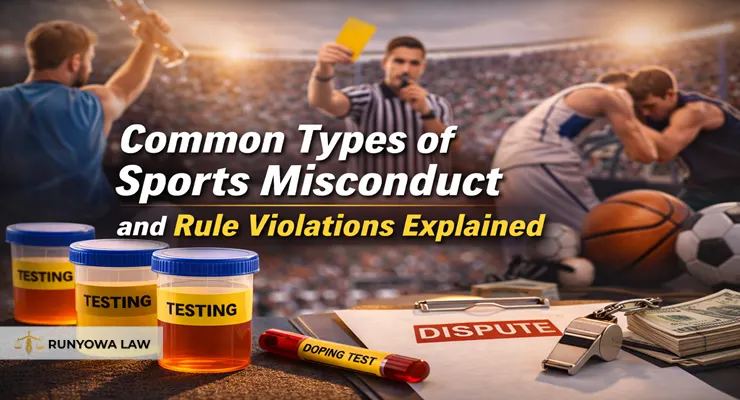
Sports inspire passion, discipline, and unity. But when rules are broken, trust is shaken. Sports misconduct can impact athletes, teams, organizations, and entire leagues. Whether it’s doping, harassment, match-fixing, or financial fraud, misconduct allegations can damage reputations overnight — often requiring guidance from a sports misconduct and disputes lawyer to protect rights and careers.
In this detailed guide, we’ll break down the most common types of sports misconduct, explain how investigations are conducted, and explore the role of sports law firms in protecting rights and ensuring fair outcomes.
If you’re an athlete, coach, sports administrator, or someone dealing with sports misconduct complaints disputes, this article will give you clarity, structure, and practical insight.
What Is Sports Misconduct?
Sports misconduct refers to behavior that violates the rules, ethics, or legal standards governing sports. It includes actions both on and off the field that undermine integrity, safety, or fairness.
In simple terms:
Sports misconduct is any act that breaches sporting regulations, codes of conduct, or applicable laws within a sports environment.
It can involve:
- Rule violations
- Criminal conduct
- Ethical breaches
- Abuse of authority
- Contract violations
Depending on the severity, sports misconduct can lead to suspensions, fines, termination of contracts, lifetime bans, or even criminal charges.
Why Sports Misconduct Matters More Than Ever
Today, sports are global industries worth billions. Professional leagues, sponsorship deals, streaming platforms, and media exposure mean that sports misconduct cases receive instant public attention.
Consequences include:
- Loss of sponsorship
- Contract termination
- Career-ending bans
- Civil lawsuits
- Criminal prosecution
- Public reputation damage
Because of these high stakes, investigations into sports misconduct must be structured, transparent, and legally sound.
Common Types of Sports Misconduct
Let’s explore the most frequent categories of sports misconduct and how they typically arise.
1. Doping and Performance-Enhancing Drug Use
Doping is one of the most recognized forms of sports misconduct.
What It Involves
- Use of banned substances
- Blood doping
- Tampering with drug tests
- Possession of prohibited substances
Why It’s Serious
Doping undermines fairness and athlete health. Anti-doping agencies use strict testing protocols to detect violations.
How It’s Investigated
- Random or targeted testing
- Laboratory analysis
- Notification of adverse findings
- Hearing before a disciplinary panel
- Appeal process
Athletes often work with sports law firms to challenge procedural errors or laboratory inconsistencies.
2. Match-Fixing and Gambling Violations
Match-fixing is a severe form of sports misconduct that damages public trust.
Examples
- Deliberately losing a match
- Influencing specific outcomes (spot-fixing)
- Insider betting
- Sharing confidential team information
Investigation Process
- Betting pattern analysis
- Financial transaction tracking
- Communication records review
- Cooperation with law enforcement
This type of sports misconduct often involves criminal law and regulatory bodies working together.
3. Harassment and Abuse
Harassment, bullying, or abuse is a growing area of sports misconduct complaints.
Types
- Sexual harassment
- Emotional abuse
- Physical abuse
- Discrimination
- Cyber harassment
Sports organizations now implement safeguarding policies to prevent misconduct.
Investigation Steps
- Formal complaint submission
- Appointment of independent investigator
- Interviews with witnesses
- Evidence review
- Final report and recommendations
Due process is critical to protect both complainant and accused.
4. Sexual Misconduct
Sexual misconduct allegations can be career-ending and legally complex.
Includes:
- Inappropriate relationships
- Sexual assault
- Exploitation of minors
- Abuse of power dynamics
Investigation Structure
- Immediate suspension (if risk is present)
- Internal disciplinary inquiry
- Police involvement (if criminal)
- Confidential hearing
Because of reputational risks, organizations often consult sports law firms early in the process.
5. Financial Misconduct and Fraud
Financial irregularities are another form of sports misconduct.
Examples
- Embezzlement
- Salary cap violations
- Sponsorship fraud
- Ticket revenue manipulation
Investigation Tools
- Forensic audits
- Contract reviews
- Financial record analysis
- Third-party compliance audits
Financial sports misconduct often leads to both civil penalties and criminal charges.
6. Violent Conduct and On-Field Aggression
Not all aggression in sports qualifies as sports misconduct. However, excessive violence beyond the rules does.
Examples
- Intentional harm
- Assault outside play
- Bench-clearing fights
- Dangerous play
Referees, league officials, and review committees examine video footage and referee reports before imposing penalties.
7. Substance Abuse (Non-Performance Enhancing)
This includes:
- Illegal drug use
- Alcohol-related incidents
- Public intoxication
Although not performance-related, it may violate team codes of conduct and qualify as sports misconduct.
8. Social Media and Reputation Violations
Athletes are public figures. Social media misuse can trigger sports misconduct proceedings.
Includes:
- Offensive posts
- Hate speech
- Leaking confidential information
- Brand damage
Investigation may include digital forensic analysis and contractual review.
9. Bullying and Team Culture Violations
Toxic locker-room culture is increasingly recognized as sports misconduct.
Examples:
- Hazing rituals
- Verbal abuse
- Exclusion tactics
- Psychological pressure
Organizations now implement whistleblower mechanisms to address these issues.
How Sports Misconduct Is Investigated
Understanding the investigation process helps athletes and organizations respond properly.
Here’s a typical structure.
Step 1: Complaint Filing
A report may come from:
- An athlete
- A coach
- A parent
- A referee
- An external whistleblower
Most leagues have formal reporting mechanisms.
Step 2: Preliminary Assessment
Officials determine:
- Does the complaint fall under sports misconduct?
- Is there immediate risk?
- Should interim suspension apply?
Step 3: Independent Investigation
Neutral investigators are often appointed to ensure fairness.
They may:
- Conduct interviews
- Review digital evidence
- Analyze financial records
- Examine surveillance footage
Step 4: Disciplinary Hearing
A panel reviews evidence and hears arguments.
Athletes typically:
- Present legal representation
- Submit documentary evidence
- Call witnesses
This is where sports law firms play a major role.
Step 5: Decision and Sanctions
Possible outcomes:
- Warning
- Fine
- Suspension
- Contract termination
- Lifetime ban
Step 6: Appeal
Many leagues allow appeals to:
- Arbitration panels
- National governing bodies
- Sports tribunals
- Civil courts
Legal Rights in Sports Misconduct Cases
Even in internal disciplinary proceedings, individuals accused of sports misconduct are entitled to fundamental legal protections. Regardless of whether the case involves doping, harassment, financial irregularities, or other violations, due process must always be followed to ensure fairness and transparency.
Key rights in sports misconduct cases include:
- Right to notice – You must be formally informed of the allegations against you.
- Right to representation – You have the right to consult and be represented by legal counsel.
- Right to present evidence – You can submit documents, call witnesses, and respond to claims.
- Right to appeal – Most governing bodies allow appeals to higher tribunals or arbitration panels.
- Protection against bias – Decision-makers must remain neutral and free from conflicts of interest.
Failing to follow proper procedures can invalidate findings and expose organizations to legal challenges. This is why experienced sports law firms are often consulted early in sports misconduct investigations to safeguard rights and ensure compliance with disciplinary standards.
The Role of Sports Law Firms in Sports Misconduct Cases
When facing sports misconduct allegations, having experienced legal representation is critical. Sports law firms understand the complex regulatory frameworks governing professional and amateur sports. They protect athletes, coaches, clubs, and sports organizations from procedural errors, unfair sanctions, and long-term reputational damage.
Sports law firms specialize in:
- Athlete representation in investigations and disciplinary proceedings
- Contract disputes involving teams, sponsors, or agents
- Regulatory compliance with league rules and governing bodies
- Disciplinary hearings before sports panels and committees
- Arbitration proceedings to resolve disputes outside court
Beyond representation, they play a strategic role in protecting professional careers.
They ensure:
- Proper procedure is followed during investigations
- Fair hearing standards and unbiased decision-making
- Protection of reputation through careful case management
- Negotiated settlements where appropriate
In some jurisdictions, athletes may also seek guidance from lawyers in Regina Saskatchewan for region-specific representation and local regulatory expertise.
Evidence Used in Sports Misconduct Investigations
In any sports misconduct investigation, evidence plays a crucial role in determining credibility, intent, and responsibility. Investigators rely on multiple forms of documentation and digital records to build a clear and objective case. The type and strength of evidence often determine whether disciplinary action is justified.
Common forms of evidence include:
- Email records to verify communication patterns and intent
- Text messages that may reveal misconduct or coordination
- CCTV footage capturing incidents on or off the field
- Drug test results in doping-related sports misconduct cases
- Witness testimony from teammates, staff, or officials
- Financial statements in cases involving fraud or match-fixing
- Social media activity that may violate codes of conduct
Maintaining a proper chain of custody is critical throughout the investigation. If evidence is mishandled, tampered with, or improperly documented, it can weaken a sports misconduct case and may even lead to dismissal during disciplinary hearings or appeals.
Confidentiality in Sports Misconduct Cases
Confidentiality plays a crucial role in any sports misconduct investigation. Protecting sensitive information ensures fairness, prevents reputational damage, and maintains the integrity of the process from start to finish.
Confidentiality protects:
- Complainants – Safeguarding their identity encourages reporting and reduces fear of retaliation.
- Accused individuals – Ensures due process and protects against premature judgment.
- Organizational reputation – Prevents unnecessary public scrutiny before findings are confirmed.
However, leaks can complicate investigations, influence witnesses, damage credibility, and create media trials that undermine the fairness of sports misconduct proceedings.
Challenges in Investigating Sports Misconduct
Investigating sports misconduct is rarely straightforward. Beyond gathering evidence and interviewing witnesses, organizations must navigate legal risks, reputational concerns, and intense public scrutiny. Even well-structured disciplinary systems can struggle when multiple pressures collide at once.
Key challenges include:
- Media pressure – High-profile sports misconduct cases often attract immediate public attention, influencing perception before facts are established.
- Conflicts of interest – Internal investigators may have relationships with teams, management, or sponsors, affecting objectivity.
- Biased internal committees – Decision-makers may consciously or unconsciously favor certain individuals or protect institutional interests.
- Lack of transparency – Poor communication about procedures can undermine trust in the investigation process.
- Emotional intensity – Allegations involving harassment, abuse, or violence can create strong emotional responses that complicate neutrality.
Balancing fairness and accountability in sports misconduct investigations is complex. Organizations must protect due process rights while ensuring integrity, safety, and public confidence in the sporting system.
Preventing Sports Misconduct
Prevention is always better than investigation.
Organizations should implement:
- Clear codes of conduct
- Regular training
- Whistleblower protections
- Independent ethics committees
- Transparent disciplinary frameworks
A proactive approach reduces sports misconduct risks significantly.
Civil vs Criminal Sports Misconduct
Not all sports misconduct is criminal in nature. Some violations are handled internally by leagues or governing bodies, while others may trigger formal criminal investigations. Understanding the difference between civil and criminal sports misconduct is essential for athletes, teams, and organizations facing allegations.
Civil Violations
Civil forms of sports misconduct typically involve breaches of contractual or organizational obligations rather than criminal law. These matters are usually resolved through disciplinary panels, arbitration, or civil courts.
- Contract breach
- Code of conduct violations
- Policy breaches
- Sponsorship agreement violations
- Regulatory non-compliance
Criminal Violations
Criminal sports misconduct involves behavior that violates national or regional laws. These cases go beyond internal discipline and may result in prosecution, fines, or imprisonment.
- Assault
- Sexual offenses
- Fraud
- Bribery
- Embezzlement
Criminal investigations are conducted by law enforcement agencies, and cases are prosecuted by government authorities. In such situations, legal representation becomes critical to protect rights and ensure due process.
Arbitration in Sports Misconduct Cases
Many sports misconduct disputes are resolved through arbitration instead of traditional court proceedings. Arbitration is a private dispute resolution process where an independent arbitrator or panel reviews evidence and delivers a binding decision. It is commonly used in professional leagues, governing bodies, and international competitions because it offers efficiency and expertise tailored to the sporting environment.
Key Benefits of Arbitration in Sports Misconduct Cases:
- Faster Resolution – Arbitration typically concludes more quickly than court litigation, which can take years.
- Confidential Proceedings – Unlike public court cases, arbitration hearings are usually private, helping protect reputations.
- Expert Decision-Makers – Arbitrators often have specialized knowledge in sports law and regulations.
Arbitration clauses are common in athlete contracts and league agreements, meaning many sports misconduct matters must be resolved through this process rather than in open court.
Frequently Asked Questions (FAQs)
1. What qualifies as sports misconduct?
Sports misconduct includes doping, harassment, match-fixing, financial fraud, violent conduct, and policy violations within sports organizations.
2. Can sports misconduct lead to criminal charges?
Yes. If the misconduct involves assault, fraud, or sexual offenses, criminal proceedings may follow.
3. How long do investigations take?
It varies. Minor sports misconduct cases may resolve in weeks, while complex investigations can take months.
4. Can I appeal a sports misconduct decision?
Most leagues allow appeals through arbitration panels or tribunals.
5. Should I hire a lawyer for sports misconduct allegations?
Yes. Sports law firms ensure fair procedures and protect your professional future.
6. Are sports misconduct investigations confidential?
Typically yes, but media leaks may occur in high-profile cases.
Final Thoughts
Sports are built on integrity, discipline, and respect. When sports misconduct occurs, it threatens not just individuals but the credibility of the entire sporting system. Understanding common types of sports misconduct and how investigations work empowers athletes, organizations, and stakeholders to respond wisely. Whether you are defending an allegation or filing a complaint, structured legal guidance and transparent procedures are essential.
Runyowa Law, a trusted law agency in Regina provides strategic support to ensure fairness, protect reputations, and uphold due process throughout every stage of a sports misconduct investigation. In today’s competitive world, safeguarding integrity is not optional—it is fundamental to the future of sport.