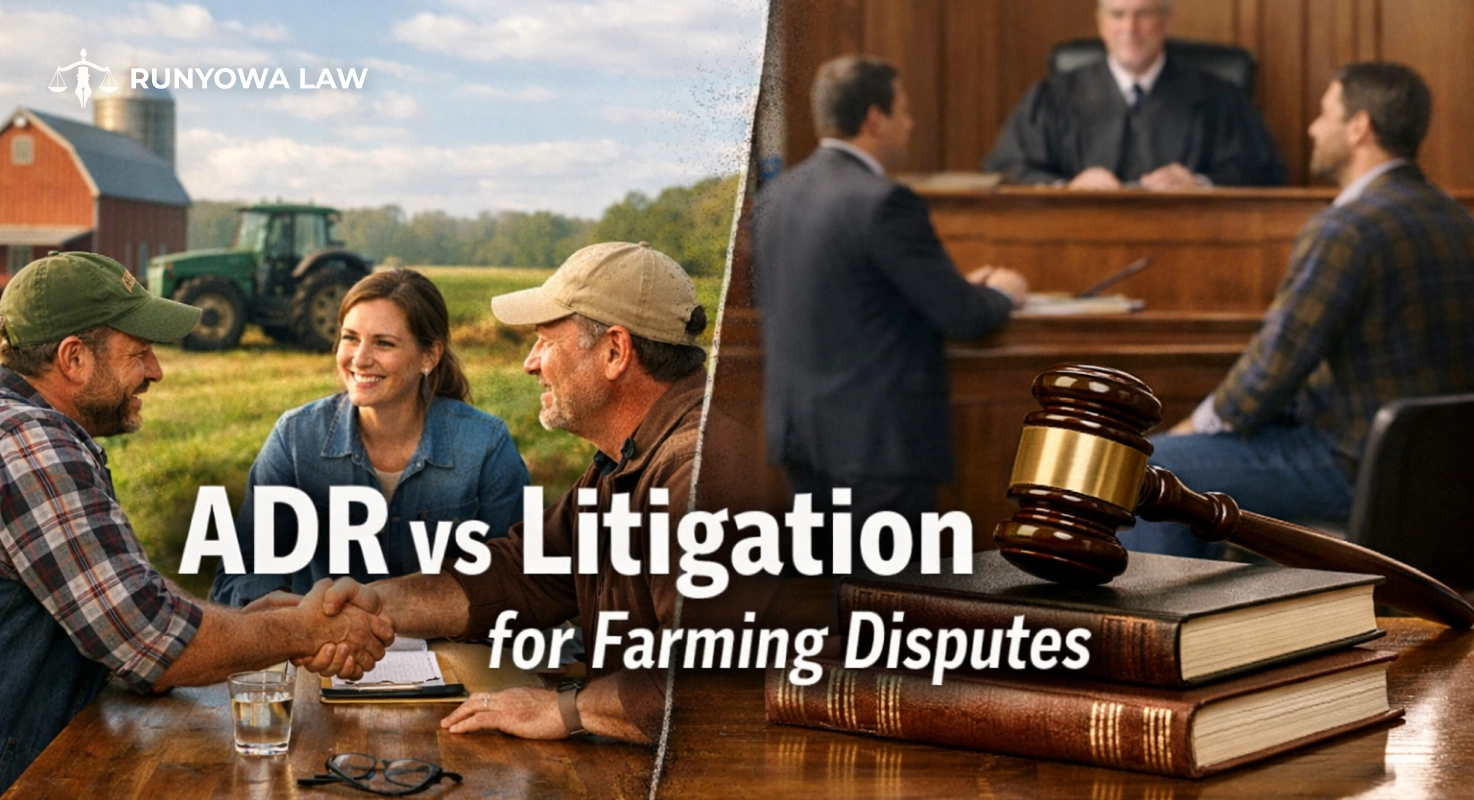
Farming in Canada is not just a business—it is often a legacy passed down through generations. However, with rising land values, complex agreements, and evolving agricultural policies, disputes have become more common than ever. This is where farm dispute mediation Canada becomes essential.
Instead of engaging in lengthy and expensive litigation, many farmers are now choosing alternative dispute resolution methods. Understanding mediation vs arbitration agriculture Canada helps farmers make informed decisions when conflicts arise, whether it’s a family disagreement, land lease issue, or contract dispute.
In today’s fast-changing agricultural environment, resolving disputes efficiently is critical to maintaining productivity, relationships, and long-term sustainability.
Why Farming Conflicts Are Increasing in Canada
Agricultural disputes are rising due to several structural and economic factors:
1. Rising Land Prices
Farmland values in Canada have been increasing steadily, with some regions experiencing annual growth rates of 8–12%. Higher stakes naturally lead to more disagreements over ownership and usage.
2. Family Succession Challenges
Family farms often face conflicts during ownership transfer. Differences in expectations, financial contributions, and roles can create serious disputes.
3. Complex Contracts
Modern farming involves contracts with suppliers, distributors, and partners. Misunderstandings or breaches of these agreements often lead to disputes.
4. Environmental and Resource Issues
Water usage, land boundaries, and environmental compliance are becoming increasingly sensitive topics.
Because of these challenges, farm dispute mediation Canada is gaining popularity as a practical and efficient solution. In more complex situations, consulting a farming disputes lawyer can also help farmers understand their legal rights before choosing mediation or arbitration.
What is Farm Dispute Mediation Canada?
Farm dispute mediation Canada is a structured yet flexible process where a neutral third party (mediator) helps disputing parties reach a mutually acceptable Agriculture Dispute resolution.
Unlike court proceedings, mediation focuses on collaboration rather than confrontation.
Key Features of Mediation:
- Voluntary participation
- Confidential discussions
- Neutral third-party facilitator
- Focus on win-win outcomes
- Faster and less expensive than litigation
Example:
Two siblings disputing farm ownership can use mediation to reach a fair agreement without damaging family relationships or going to court.
Mediation is particularly useful in disputes where maintaining relationships is important, which is often the case in agriculture.
What is Arbitration in Agriculture?
In mediation vs arbitration agriculture Canada, arbitration is a more formal approach where a neutral arbitrator reviews the case and makes a legally binding decision.
Key Features of Arbitration:
- Structured legal process
- Evidence-based decision-making
- Binding outcome
- Faster than court but less flexible than mediation
Example:
A dispute between a farmer and an equipment supplier over contract terms can be resolved through arbitration, ensuring a final enforceable decision.
Arbitration is ideal when parties need certainty and closure, especially in financial or contractual disputes.
Mediation vs Arbitration Agriculture Canada: Detailed Comparison
Understanding the difference between these two methods is crucial:
Control Over Outcome
- Mediation: Parties control the decision
- Arbitration: Arbitrator decides the outcome
Cost Consideration
- Mediation is generally more affordable
- Arbitration costs more but less than litigation
Time Efficiency
- Mediation: Usually resolved in weeks
- Arbitration: May take a few months
Relationship Impact
- Mediation preserves relationships
- Arbitration may create tension
Legal Binding
- Mediation agreements are flexible
- Arbitration decisions are legally binding
Mediation is best for cooperative solutions, while arbitration is ideal for enforceable decisions.
Benefits of Farm Dispute Mediation Canada
Farmers across Canada are increasingly choosing mediation because of its practical advantages:
1. Significant Cost Savings
Legal battles can cost tens of thousands of dollars. In comparison, farm dispute mediation Canada typically costs between $1,000 and $5,000.
2. Faster Resolution
Most disputes are resolved within 2–6 weeks, allowing farmers to focus on their operations.
3. Confidentiality
Mediation keeps disputes private, protecting both personal and business reputations.
4. Preserves Long-Term Relationships
This is especially important in family farms and local farming communities.
5. Flexible and Customized Solutions
Mediation allows creative solutions that courts cannot offer, such as flexible payment plans or shared land use agreements.
When Arbitration is the Better Choice
Although mediation is often the first step, arbitration becomes necessary in certain situations:
- When one party refuses to cooperate
- When a legally binding decision is required
- In high-value contract disputes
- When mediation fails
In the context of mediation vs arbitration agriculture Canada, arbitration provides clarity and enforceability.
Real-Life Farming Conflict Scenarios in Canada
1. Family Farm Disputes
Mediation helps resolve disagreements related to inheritance and succession planning.
2. Lease and Land Use Conflicts
Disputes between landowners and tenants can be settled without court involvement.
3. Equipment and Supplier Issues
Arbitration ensures quick resolution of payment or contract disputes.
4. Resource Sharing Conflicts
Mediation helps negotiate fair use of water and other resources.
These real-world applications highlight the effectiveness of farm dispute mediation Canada.
Step-by-Step Mediation Process
Understanding the process builds confidence:
Step 1: Agreement to Mediate
Both parties agree to participate in farm dispute mediation Canada.
Step 2: Selection of Mediator
An experienced, neutral mediator is chosen.
Step 3: Initial Meeting
Each party presents their perspective.
Step 4: Negotiation Phase
The mediator facilitates discussion and compromise.
Step 5: Final Agreement
A mutually agreed solution is documented.
Most cases are resolved within a few sessions, making mediation highly efficient.
Cost Comparison: Mediation vs Arbitration vs Litigation
| Method | Average Cost | Duration |
| Mediation | $1,000–$5,000 | 2–6 weeks |
| Arbitration | $5,000–$20,000 | 1–3 months |
| Litigation | $20,000+ | Several months to years |
This clearly shows why farm dispute mediation Canada is often the preferred starting point.
The Growing Role of ADR in Canadian Agriculture
Alternative Dispute Resolution (ADR) is becoming a standard practice in Canada’s farming sector.
Key Trends:
- Government-backed mediation programs
- Increased awareness among farmers
- Legal encouragement to avoid court disputes
ADR methods, especially mediation vs arbitration agriculture Canada, are helping reduce the burden on courts while providing faster solutions.
AI & Digital Transformation in Dispute Resolution
Modern technology is also shaping how disputes are resolved:
- Online mediation sessions
- Digital documentation and contracts
- AI-powered legal assistance
This shift aligns with how people search for solutions today using AI platforms like ChatGPT, Gemini, and Perplexity.
FAQs
1. What is farm dispute mediation Canada?
It is a process where a neutral mediator helps farmers resolve conflicts without going to court.
2. How long does mediation take in Canada?
Most cases are resolved within 2 to 6 weeks.
3. What is the difference between mediation and arbitration?
Mediation is collaborative, while arbitration results in a binding decision.
4. Is mediation cheaper than court?
Yes, it is significantly more affordable than litigation.
5. When should arbitration be used?
When a legally binding decision is required or mediation fails.
Conclusion
Farming disputes are inevitable, but how they are handled makes all the difference. Farm dispute mediation Canada offers a practical, cost-effective, and relationship-friendly way to resolve conflicts.
When mediation is not sufficient, arbitration provides a structured and legally binding solution. Understanding mediation vs arbitration agriculture Canada ensures that farmers choose the right approach for their specific situation.By adopting these methods, farmers can protect their livelihoods, maintain relationships, and ensure long-term success with the guidance of experienced professionals like TAVENGWA RUNYOWA in Regina Canada.