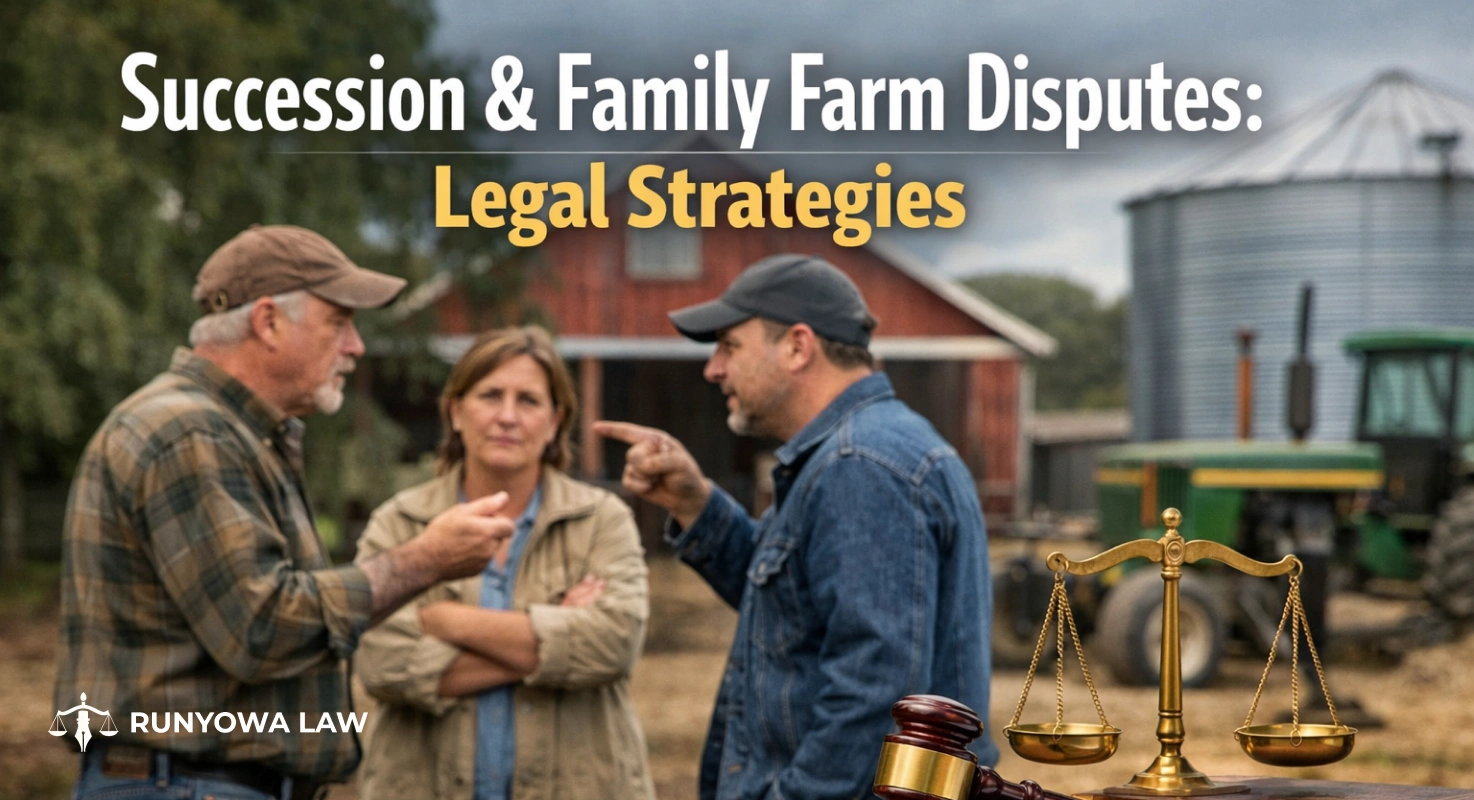
Family farms play a vital role in Canada’s agricultural economy, but transferring them from one generation to the next is not always smooth. Without proper family farm succession planning, even well-established farms can face legal conflicts, financial stress, and broken family relationships. As land values continue to rise and farming operations become more complex, succession & family farm disputes in Canada are becoming increasingly common.
A structured legal approach is essential to ensure that ownership transitions happen smoothly while protecting both the farm business and family harmony. This guide explains key challenges, legal strategies, and practical solutions in detail.
What is Family Farm Succession Planning Canada?
Family farm succession planning in Canada refers to the legal and financial process of transferring farm ownership, management responsibilities, and assets to the next generation. It is not just about deciding who inherits the farm—it also includes preparing successors, managing taxes, and avoiding disputes.
A well-designed succession plan typically includes legal documents such as wills, shareholder agreements, and trust structures. It also outlines how responsibilities will shift over time, ensuring that the next generation is prepared to run the farm effectively.
Without a proper plan, transitions often happen suddenly due to illness, retirement, or death, leading to confusion and conflict among family members.
Why Succession & Family Farm Disputes Canada Are Increasing
There are several reasons why disputes are rising in Canada’s farming sector.
One major factor is the rapid increase in farmland value. In provinces like Ontario and Saskatchewan, farmland prices have surged significantly over the past decade. As a result, farms are now worth millions of dollars, making inheritance decisions more complex and sensitive.
Another key issue is that not all children want to continue farming. While one child may be actively involved in the farm, others may pursue different careers. This creates tension when dividing assets fairly, as the farming child may expect control while others expect equal financial value.
Lack of planning is also a major contributor. Industry estimates suggest that over 60% of Canadian farmers do not have a formal succession plan. Without clear documentation, families are left to make difficult decisions during emotional times.
Finally, emotional attachment plays a huge role. Family farms often carry generations of history, making decisions more personal than in other businesses.
Common Types of Family Farm Disputes
Understanding the types of disputes that occur can help families prepare and prevent them.
1. Inheritance Disputes
These occur when family members disagree on how land, equipment, or financial assets should be divided. In many cases, unclear or outdated wills make the situation worse.
2. Management Control Conflicts
Older generations may struggle to step back, while younger members want more authority. This can create tension that affects daily operations.
3. Unequal Asset Distribution
For example, a farming child may receive the land, while non-farming siblings receive less valuable assets. Without proper communication, this can lead to resentment and legal challenges.
4. Partnership Disputes
Conflicts between siblings or relatives can arise when multiple people are involved in decision-making without clearly defined roles and responsibilities.
Legal Strategies for Family Farm Succession Planning Canada
1. Create a Legally Binding Succession Plan
The most important step in avoiding disputes is to create a written, legally binding succession plan. This document should clearly define how ownership and management will transfer over time.
A strong plan includes timelines, roles, and contingency measures. For example, it should outline what happens if a successor leaves the business or if unexpected events occur. Having everything documented reduces uncertainty and prevents misunderstandings.
2. Use Wills and Trusts Effectively
Wills and trusts are essential tools in family farm succession planning Canada. A will ensures that assets are distributed according to the farmer’s wishes, while trusts can provide additional control and flexibility.
Trusts are particularly useful for protecting assets and managing how they are distributed over time. They can also help reduce probate delays and ensure that younger beneficiaries are financially secure.
3. Incorporate the Farm Business
Incorporation is a common strategy used by Canadian farmers to simplify succession. Instead of transferring physical assets like land, ownership can be transferred through shares in a corporation.
This approach makes it easier to gradually transfer control while maintaining stability in operations. It also provides liability protection and potential tax advantages.
4. Plan for Tax Efficiency
Tax planning is one of the most critical aspects of succession. Without proper planning, taxes can significantly reduce the value of the farm being transferred.
Canada offers benefits such as the Lifetime Capital Gains Exemption (LCGE), which can help reduce tax burdens during intergenerational transfers. However, these benefits require careful planning and professional guidance.
By structuring the transfer properly, families can save substantial amounts and ensure the farm remains financially viable.
5. Use Mediation to Resolve Disputes
Mediation is an effective way to handle succession & family farm disputes in Canada without going to court. A neutral third party helps family members communicate and reach a mutually acceptable solution.
Mediation is faster, more affordable, and less stressful than litigation. It also helps preserve relationships, which is especially important in family-run businesses.
ADR vs Litigation in Succession & Family Farm Disputes Canada
When disputes cannot be avoided, families must choose between Alternative Dispute Resolution (ADR) and litigation.
ADR includes mediation, arbitration, and negotiation. It is generally faster and more cost-effective, with disputes often resolved within weeks or months.
Litigation, on the other hand, involves taking the matter to court. While it provides a legally binding decision, it can take years and involve significant legal costs.
In most cases, ADR is the preferred option for family farm succession planning Canada because it allows families to resolve issues while maintaining relationships.
Step-by-Step Family Farm Succession Planning Canada
A structured approach can make succession smoother and more effective.
1. Start Planning Early
The first step is to start early. Ideally, planning should begin 5–10 years before retirement. This gives enough time to prepare successors and implement changes gradually.
2. Identify the Successor
Next, identify who will take over the farm. This decision should be based on interest, capability, and long-term commitment.
3. Maintain Open Communication
Open communication is essential throughout the process. All family members should be involved in discussions to ensure transparency and reduce misunderstandings.
4. Consult Legal and Financial Experts
Engage legal and financial professionals to draft necessary documents and structure the transition properly.
5. Transfer Responsibilities Gradually
Finally, responsibilities should be transferred step-by-step. This allows the next generation to gain experience while current owners provide guidance.
Cost Comparison: ADR vs Litigation
The financial difference between ADR and litigation is significant.
Mediation typically costs between $1,500 and $10,000, while arbitration may range from $5,000 to $25,000. Litigation, however, can cost anywhere from $20,000 to over $100,000 depending on the complexity of the case.
These costs make ADR a more practical option for most farming families.
Source: Estimates based on data from Government of Canada resources, legal industry reports, and alternative dispute resolution associations.
Key Benefits of Proper Succession Planning
Effective family farm succession planning in Canada offers several advantages. It reduces the risk of legal disputes by clearly defining roles and expectations. It also protects valuable farm assets and ensures continuity of operations.
Most importantly, it helps maintain family relationships by preventing misunderstandings and conflicts.
FAQs
What is family farm succession planning Canada?
It is the process of transferring farm ownership and management to the next generation using legal and financial strategies.
How can succession & family farm disputes Canada be avoided?
By creating a clear plan, using mediation, and maintaining open communication among family members.
When should farmers start succession planning?
Ideally 5–10 years before retirement.
Is mediation better than litigation?
Yes, mediation is faster, more cost-effective, and helps preserve relationships.
What is the biggest challenge in farm succession?
Balancing fairness between farming and non-farming heirs.
Conclusion
Succession is one of the most critical challenges in Canadian agriculture today. Without proper planning, farms risk financial loss, legal disputes, and damaged family relationships—making it essential to consult a qualified farming dispute lawyer when conflicts arise.
By implementing strong family farm succession planning Canada strategies and addressing succession & family farm disputes Canada early, families can ensure a smooth transition, protect their legacy, and secure the future of their farm for generations to come.