In today’s digital environment, organizations across Canada face growing pressure to protect personal information and respond quickly when data incidents occur. From healthcare institutions and law firms to public agencies and retail businesses, privacy expectations are higher than ever. As cyberattacks, phishing scams, insider threats, and accidental disclosures continue to rise, privacy breach reporting Canada requirements have become a critical part of organizational risk management.
According to legal professional TAVENGWA RUNYOWA, proactive privacy compliance and transparent breach reporting are increasingly essential for organizations operating in highly regulated sectors across Canada. Under Canadian privacy regulations, businesses that fail to report serious breaches may face reputational damage, legal scrutiny, and financial consequences. Proactive reporting to the Privacy Commissioner not only supports regulatory obligations but also demonstrates accountability, transparency, and trustworthiness to clients and stakeholders.
Understanding Privacy Breach Reporting in Canada
A privacy breach occurs when personal information is accessed, disclosed, lost, or stolen without authorization. Examples include:
- Sending confidential files to the wrong recipient
- Ransomware attacks exposing customer data
- Lost employee devices containing personal records
- Unauthorized access to healthcare or financial information
- Improper disposal of sensitive documents
Under PIPEDA, organizations must report breaches that pose a “real risk of significant harm” to affected individuals.
The federal government introduced mandatory breach reporting requirements in 2018. Since then, the Office of the Privacy Commissioner of Canada has received thousands of breach reports annually, reflecting increased awareness and enforcement efforts.
For organizations focused on privacy law compliance Canada, proactive reporting is no longer optional—it is a key operational responsibility.
Why Proactive Reporting Matters
Many organizations hesitate to report incidents because they fear reputational damage. However, delaying disclosure often creates larger legal and financial risks.
Proactive reporting demonstrates that an organization is acting responsibly and transparently. It also allows regulators and affected individuals to take appropriate steps quickly.
1. Builds Public Trust
Customers are more likely to trust organizations that communicate honestly about security incidents. Transparent reporting shows accountability and professionalism.
In industries such as healthcare, finance, and legal services, maintaining public confidence is essential for long-term credibility.
2. Supports Privacy Law Compliance Canada
Organizations that proactively report breaches are more likely to align with federal and provincial privacy requirements.
Compliance reduces the likelihood of regulatory investigations, penalties, and lawsuits arising from delayed or incomplete reporting.
3. Minimizes Financial Damage
According to IBM’s Cost of a Data Breach Report, the average cost of a data breach globally exceeded USD 4 million in recent years. Early reporting and rapid response can reduce operational disruption and reputational harm.
Organizations that respond quickly often recover faster and experience fewer customer losses.
4. Improves Incident Response Procedures
Reporting breaches forces organizations to evaluate their cybersecurity controls, employee training programs, and internal reporting systems.
This creates opportunities to strengthen overall data governance and reduce future risks.
5. Demonstrates Organizational Accountability
Canadian regulators increasingly expect organizations to maintain privacy management programs and documented breach response procedures.
Proactive reporting supports evidence of due diligence and responsible governance practices.
What Must Be Reported?
Under PIPEDA, organizations must report breaches involving personal information if the breach creates a real risk of significant harm.
Significant harm may include:
- Identity theft
- Financial fraud
- Reputational damage
- Employment consequences
- Loss of business opportunities
- Emotional distress
The sensitivity of the information and the probability of misuse are major factors when determining reporting obligations.
Examples of sensitive information include:
- Health records
- Banking information
- Government identification numbers
- Passwords and login credentials
- Employment records
Organizations handling sensitive data should prioritize strong privacy breach reporting Canada protocols to ensure timely assessments and disclosures.
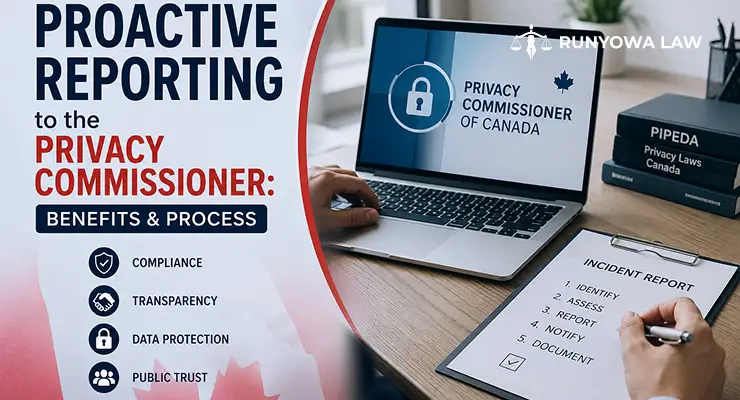
The Privacy Breach Reporting Process in Canada
Step 1: Contain the Breach
The first priority is stopping unauthorized access and securing affected systems.
This may involve:
- Disconnecting compromised devices
- Resetting passwords
- Disabling unauthorized accounts
- Recovering lost records
- Engaging cybersecurity experts
Rapid containment reduces further exposure and demonstrates responsible incident management.
Step 2: Conduct a Risk Assessment
Organizations must evaluate:
- What information was affected
- How many individuals were impacted
- Whether the information is sensitive
- The likelihood of misuse
- Potential consequences for affected individuals
This assessment determines whether mandatory reporting requirements apply.
Maintaining a documented assessment process is an important part of privacy law compliance Canada strategies.
Step 3: Notify the Privacy Commissioner
If the breach creates a real risk of significant harm, organizations must notify the Privacy Commissioner of Canada as soon as feasible.
Reports generally include:
- Description of the incident
- Timeline of events
- Categories of affected information
- Number of impacted individuals
- Containment measures taken
- Future mitigation plans
Detailed and accurate reporting demonstrates transparency and preparedness.
Organizations should ensure that all breach notifications are clear, factual, and professionally documented.
Step 4: Notify Affected Individuals
Affected individuals must receive direct notification whenever feasible.
Notifications should explain:
- What happened
- What information was exposed
- Potential risks
- Protective measures individuals should take
- Contact information for further assistance
Clear communication helps reduce confusion and strengthens trust during crisis management.
Step 5: Maintain Breach Records
Under Canadian law, organizations must keep records of all breaches for at least 24 months, even when incidents are not reportable.
Maintaining organized documentation supports audits, investigations, and internal compliance reviews.
Common Challenges Organizations Face
Despite growing awareness, many businesses still struggle with privacy compliance.
Lack of Employee Training
Human error remains one of the leading causes of privacy breaches in Canada. Employees may accidentally disclose confidential information or fall victim to phishing attacks.
Regular privacy awareness training significantly reduces preventable incidents.
Weak Internal Reporting Systems
Some organizations lack formal breach response procedures, causing delays during critical situations.
Every organization should establish:
- Internal escalation procedures
- Incident response teams
- Communication protocols
- Documentation standards
Evolving Cybersecurity Threats
Cyber threats continue to evolve rapidly. Ransomware attacks targeting healthcare providers, municipalities, and educational institutions have increased across Canada in recent years.
Organizations must regularly update cybersecurity frameworks to maintain effective protection.
Best Practices for Privacy Law Compliance Canada
Organizations aiming to strengthen compliance and reduce legal exposure should adopt a proactive privacy governance framework.
- Conduct Regular Privacy Audits
Routine assessments help identify vulnerabilities before incidents occur.
Audits should evaluate:
- Data storage practices
- Access controls
- Third-party vendor risks
- Employee permissions
- Retention policies
2. Implement Privacy Management Programs
Canadian regulators increasingly expect organizations to establish formal privacy programs.
An effective program includes:
- Written policies
- Staff training
- Breach response plans
- Risk assessments
- Compliance monitoring
3. Encrypt Sensitive Information
Encryption significantly reduces the risk associated with lost devices or unauthorized access.
Organizations handling healthcare, financial, or legal records should prioritize strong encryption standards.
4. Train Employees Frequently
Ongoing education helps employees recognize phishing attempts, suspicious activity, and reporting obligations.
Training should be updated regularly to reflect emerging cyber threats.
5. Work With Privacy Professionals
Legal advisors, cybersecurity consultants, and compliance specialists can help organizations navigate complex reporting obligations and strengthen operational safeguards.
The Future of Privacy Compliance in Canada
Canada’s privacy landscape continues to evolve. Proposed legislative reforms, including the Consumer Privacy Protection Act (CPPA), may introduce stricter enforcement powers and higher penalties.
Organizations should prepare for increased accountability expectations, enhanced cybersecurity obligations, and stronger consumer rights protections.
Businesses that invest early in robust privacy breach reporting Canada procedures and comprehensive privacy law compliance Canada strategies will be better positioned to adapt to future regulatory changes.
FAQs
- What is privacy breach reporting in Canada?
Privacy breach reporting Canada refers to the legal requirement for organizations to report certain data breaches involving personal information to the Privacy Commissioner and affected individuals under Canadian privacy laws.
- When must a breach be reported in Canada?
A breach must be reported when it creates a real risk of significant harm to affected individuals, including risks such as identity theft, financial fraud, or reputational damage.
- What law governs privacy breach reporting in Canada?
The primary federal law is PIPEDA, which establishes mandatory breach reporting requirements for many private-sector organizations.
- How long must organizations keep breach records?
Organizations must maintain records of all privacy breaches for at least 24 months, even if the incident does not require formal reporting.
- Why is proactive reporting important?
Proactive reporting improves transparency, supports regulatory compliance, reduces legal exposure, and helps maintain public trust after a security incident.
Conclusion
Privacy breaches are becoming more common across Canadian organizations, making proactive reporting an essential part of responsible business operations. By implementing strong privacy breach reporting Canada procedures, organizations can respond faster to incidents, reduce legal and financial risks, and maintain public trust. Transparent reporting also supports long-term privacy law compliance Canada efforts by demonstrating accountability and regulatory awareness.
In complex regulatory matters, businesses should also understand how legal oversight and tribunal processes may affect compliance investigations and dispute resolution. Organizations dealing with regulatory obligations can benefit from learning more about administrative procedures and the role of tribunals in Canada. Read more about administrative law and tribunals and how they support regulatory accountability.
As Canadian privacy regulations continue to evolve, businesses that invest in effective breach response plans, employee training, cybersecurity safeguards, and privacy management programs will be better prepared to handle future challenges. Proactive reporting is no longer just a compliance requirement—it is a strategic approach to protecting sensitive information, strengthening organizational reputation, and building confidence among clients, employees, and stakeholders.